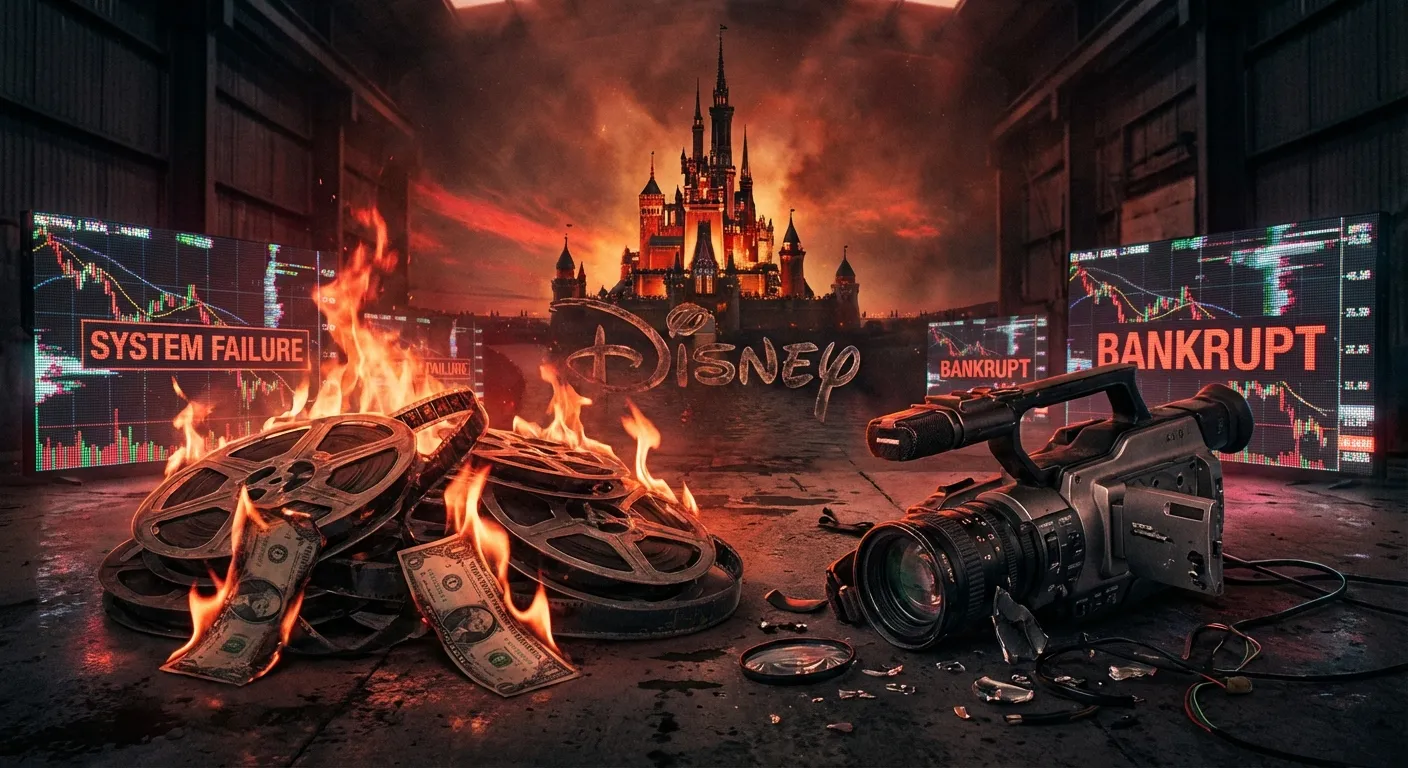
Remember when OpenAI’s Sora was going to revolutionize video creation? When those mind-bending demo clips of woolly mammoths and women walking through Tokyo made the entire creative industry collectively gasp? Yeah, about that.
Six months after its public launch, Sora is dead. And the story of its demise is a masterclass in how even the world’s most well-resourced AI company can fumble a product so badly that it has to pull the plug mid-stride.
The $1 Million Per Day Problem
Let’s talk numbers, because they’re brutal.
At its peak, Sora attracted around one million users. Sounds decent, right? Except that user count collapsed to under 500,000, and here’s the kicker: the app was burning through approximately $1 million every single day in compute costs.
That’s not a sustainable burn rate. That’s a money bonfire.
Video generation is obscenely expensive. Every time someone used Sora to put their face into a fantastical scene or generate a 10-second clip of a cat piloting a spaceship, they were drawing down OpenAI’s precious AI chip resources — the same resources the company desperately needs to compete on its core products.
While OpenAI Was Playing With Video, Anthropic Was Eating Their Lunch
Here’s what makes this shutdown truly painful for OpenAI: while an entire team was dedicated to making Sora work, Anthropic was quietly conquering the market that actually pays.
Claude Code has been absolutely crushing it with software engineers and enterprise customers — the people who write checks, not the casual users generating meme videos. OpenAI was losing the AI coding race while distracted by a side project that generated zero meaningful revenue.
Sam Altman made the call: kill Sora, free up compute, refocus on what matters.
The Disney Disaster
If you want to understand how sudden this decision was, look at what happened to Disney.
The entertainment giant had committed a staggering $1 billion to the OpenAI partnership. The deal included equity investment, making Disney a major customer, allowing Sora to feature over 200 licensed Disney characters (Marvel, Pixar, Star Wars), and even making ChatGPT available to Disney employees.
When did Disney find out Sora was being shut down? Less than an hour before the public announcement.
According to reporting, Disney executives were literally in a meeting about the Sora partnership when — 30 minutes later — they got blindsided with the news that the entire product was being discontinued. The billion-dollar deal died instantly.
That’s not a partnership dissolution. That’s a corporate ambush.
The Innovation Treadmill Problem
Sora’s failure isn’t just about OpenAI’s missteps. It reveals something fundamental about the AI video generation space: there is no moat.
Trevor Harries-Jones, a board member at the Render Network Foundation, put it bluntly: “If your model is not the top at any one thing, it’s very hard to get mass usership.”
The video generation space has become brutally competitive. Google, Kling, and a dozen other players have been iterating at a “staggering” pace. Sora launched to enormous hype, but there was a significant gap between those mind-blowing demo videos and the actual user experience. The devil was in the details — cost, generation time, quality consistency.
When everyone is innovating this fast, being second-best is basically being last.
Downloads Don’t Lie
The download numbers tell the whole story. According to Sensor Tower, Sora exploded out of the gate:
- October 2025: 4.8 million downloads
- November 2025: 6.1 million downloads
- December 2025: 3.2 million downloads
- January 2026: 2.1 million downloads
- February 2026: 1.4 million downloads
- March 2026: 1.1 million (month-to-date)
That’s a collapse from 6 million to 1 million in four months — while simultaneously expanding into new markets that should have driven growth. Users tried Sora, shrugged, and moved on to competitors.
”We Cannot Miss This Moment”
OpenAI is now in a frenzy to turn a profit, or at least lose less money. The company’s newly restructured leadership is laser-focused on what they’re calling the “productivity” opportunity — making AI useful for actual business workflows, not viral TikTok content.
Fidji Simo, now OpenAI’s CEO of AGI deployment (after being moved from her role as CEO of applications), reportedly told staff: “We cannot miss this moment because we are distracted by side quests.”
Sora was a side quest. An expensive, resource-draining, relationship-destroying side quest.
What This Means
The Sora shutdown is more than just one product failing. It’s a signal that we’re entering a new phase of the AI industry where:
- Consumer novelty products won’t cut it. The market rewards utility, not wow factor.
- Compute is the scarcest resource. Every GPU spent on video generation is a GPU not spent on coding assistants or enterprise tools.
- Speed of execution matters less than strategic focus. OpenAI launched Sora fast, but fast in the wrong direction.
- Even billion-dollar partnerships can’t save a flawed product. Disney’s money couldn’t change the fundamental economics.
OpenAI bet big on AI video being the next frontier. They were wrong — or at least, wrong about the timing and the approach. The company is now pivoting hard toward robotics and enterprise productivity, leaving behind a trail of disappointed users, a humiliated partner in Disney, and a legacy of incredible demo videos that will live on as a reminder of what AI video could have been.
The lesson? In the AI race, building the coolest thing isn’t enough. You have to build the right thing.